Browse Items (972 total)
Sort by:
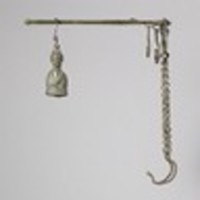
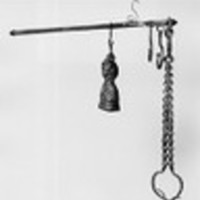
Empress Bust Weight
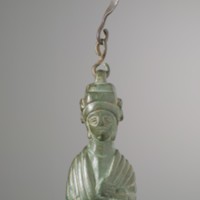
Museum wall text: “Steelyards were used to weigh commodities in the ancient marketplace. The beam, with units of measurement inscribed on three faces, is calibrated for three different scales: one weighed objects up to 13 pounds, another up to 34,…
Fragment of a Marble Tomb Relief with Christ Giving the Law
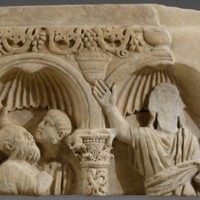
Museum wall text: “The authority of the Christian church grew rapidly with emperor Constantine's recognition of the faith as a legal religion within the Roman Empire in 313. Increasingly the most powerful centers of the church were the old imperial…
Laocoön and His Sons, Vatican Vergil
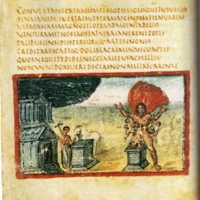
The Vatican Vergil, which contains fragments of Vergil’s Aeneid and Georgics, is one of three surviving illustrated manuscripts of classical literature along with the Vergilius Romanus and the Ambrosian Iliad. Today, the Vatican Vergil consists of 76…
Seuso Platter
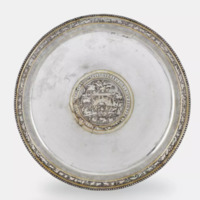
The Seuso Platter is one of the 14 silver objects that make up the Seuso Treasure. This hoard of late Roman silver was at the center of decades worth of debate in the international art market, stemming from falsified documentation with regards to the…
Gold Glass Medallion with a Mother and Child
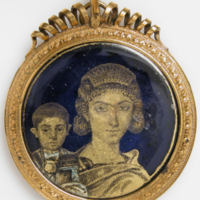
Museum Description: "The mother, a fashionably coiffed matron, is shown with her son. He wears a large gold pectoral, or neck ring. Medallions like this one, meant to be worn as jewelry, are closely associated with Alexandria.”
Colossus of Constantine
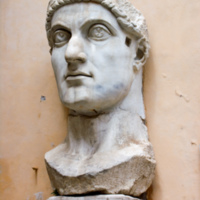
The colossal statue of Roman Emperor Constantine the Great (r. July 25, 306 – May 22, 337) originally stood in the western apse of the Basilica of Maxentius in Rome. Fragments can now be found in the courtyard of the Palazzo dei Conservatori of the…
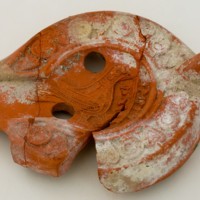
Mummy Portrait of a Man
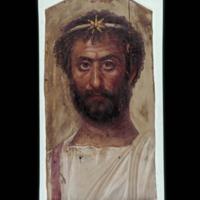
Museum Description: “Portrait, perhaps of a priest, in encaustic on limewood: the panel is cracked through the right side from the upper edge to the subject's proper left ear. A row of four nail holes indicative of reuse, or perhaps of attachment to…