Empress Bust Weight
Dublin Core
Title
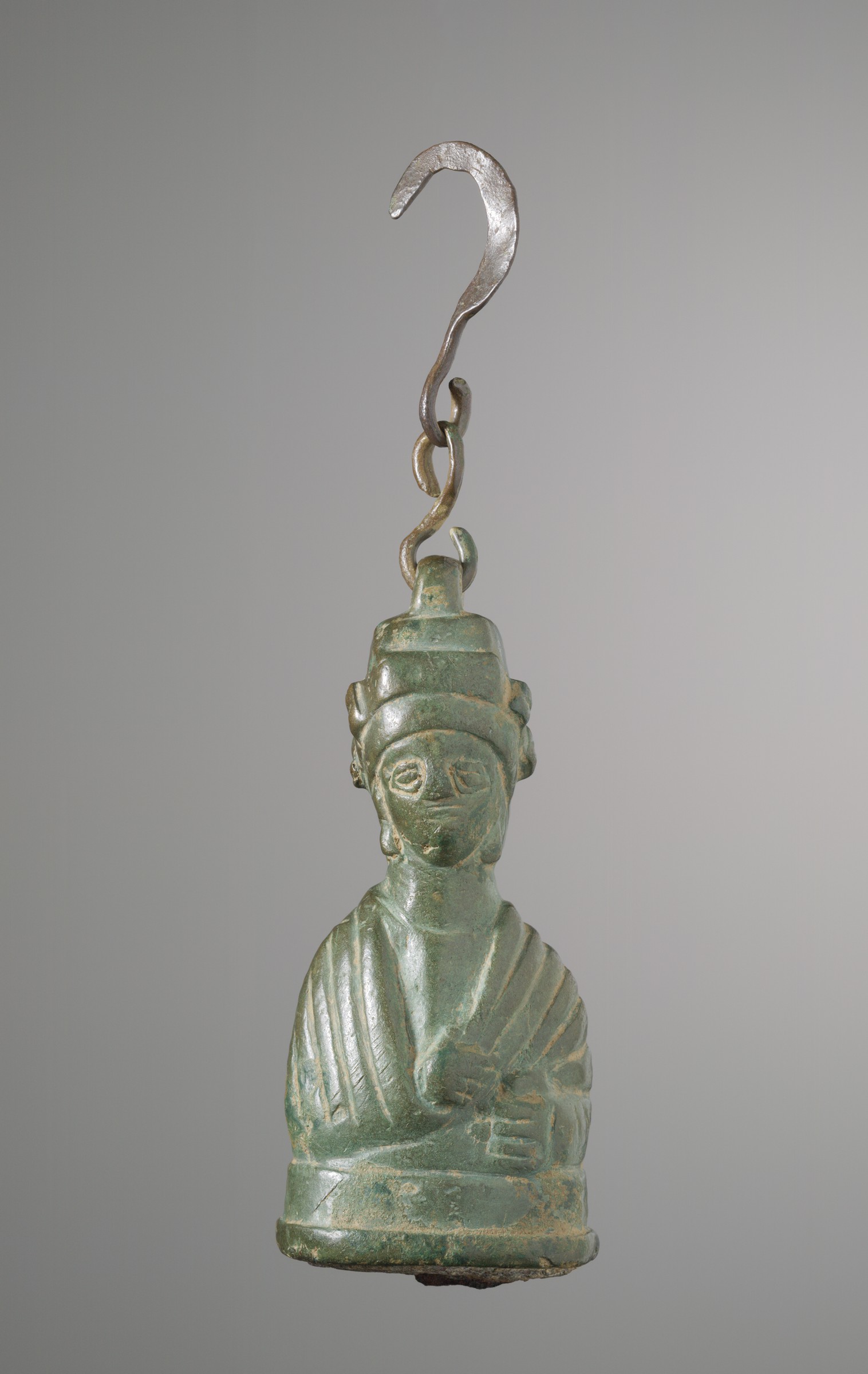
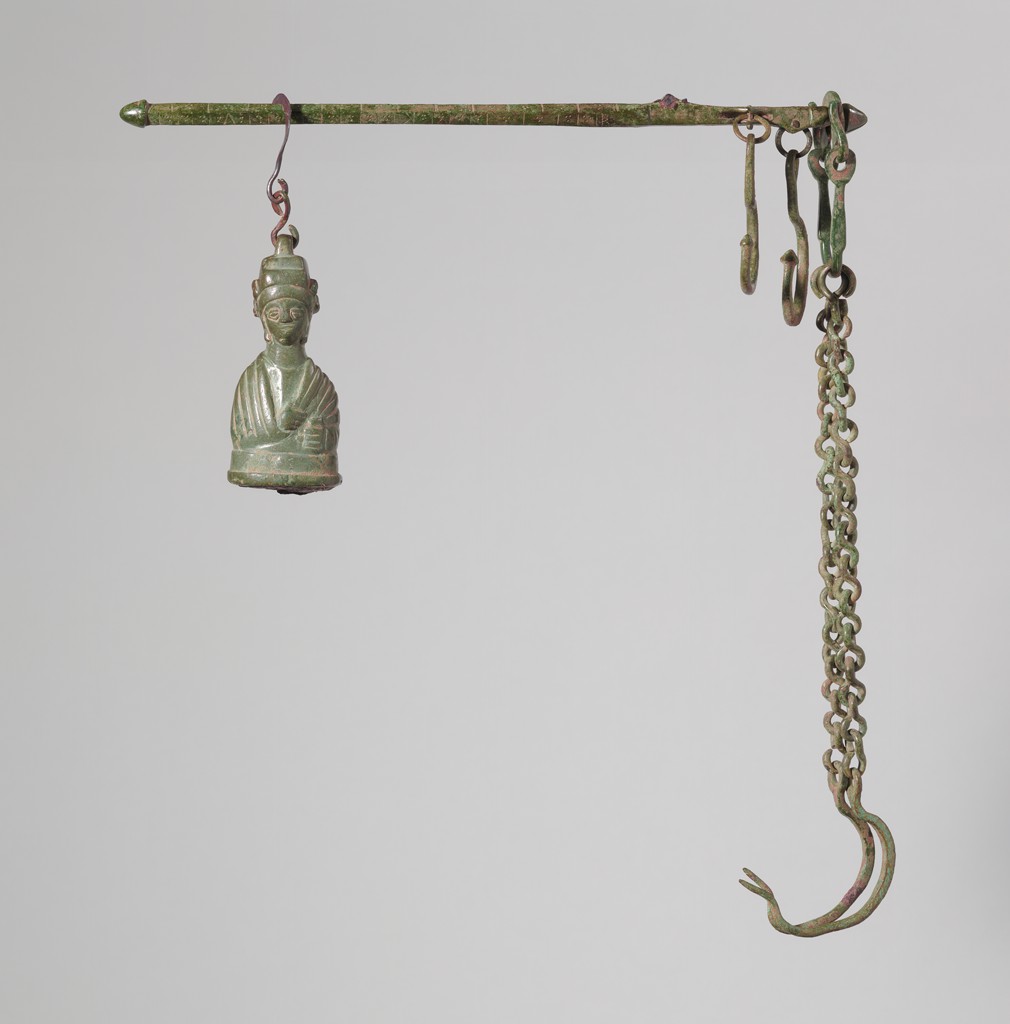
Empress Bust Weight
Subject
Empress Bust Weight, Steelyard, and Collar with Chains, 5th-7th century, Byzantine, Mixed copper alloy; lead and iron fill in bust, weight: 13.6 x 6 x 4.7 cm (1441 g.); chains and hooks: 44 x 5.7 cm; crossbeam with hooks: 39.2 x 1 cm, Cambridge, MA, Harvard Art Museums.
Description
Museum wall text: “Steelyards were used to weigh commodities in the ancient marketplace. The beam, with units of measurement inscribed on three faces, is calibrated for three different scales: one weighed objects up to 13 pounds, another up to 34, and the third up to 85 pounds. The steelyard would be suspended by the short hook (two of the original three remain) appropriate to the scale desired, with the commodity suspended from the hooks on the two long chains. The bust weight was moved along the bar until it balanced. The stylized image, with a simple diadem to indicate rank, does not depict a particular empress. Bust weights often represented gods, heroes, and emperors or empresses. Such imagery evoked imperial authority over weights and measures, guaranteeing fair transactions with a scale calibrated to official standards. The empress’s gestures (holding her cloak and grasping a scroll) indicate her erudition and imperial wisdom.”
Source
https://hvrd.art/o/320164
Rights
Harvard Art Museums 2007.104.3.A-C
Files
Collection
Citation
“Empress Bust Weight,” HAA Image Hosting, accessed September 22, 2026, https://haaimagehosting.omeka.fas.harvard.edu/items/show/279.
Embed
Copy the code below into your web page