Colossus of Constantine
Dublin Core
Title
Colossus of Constantine
Subject
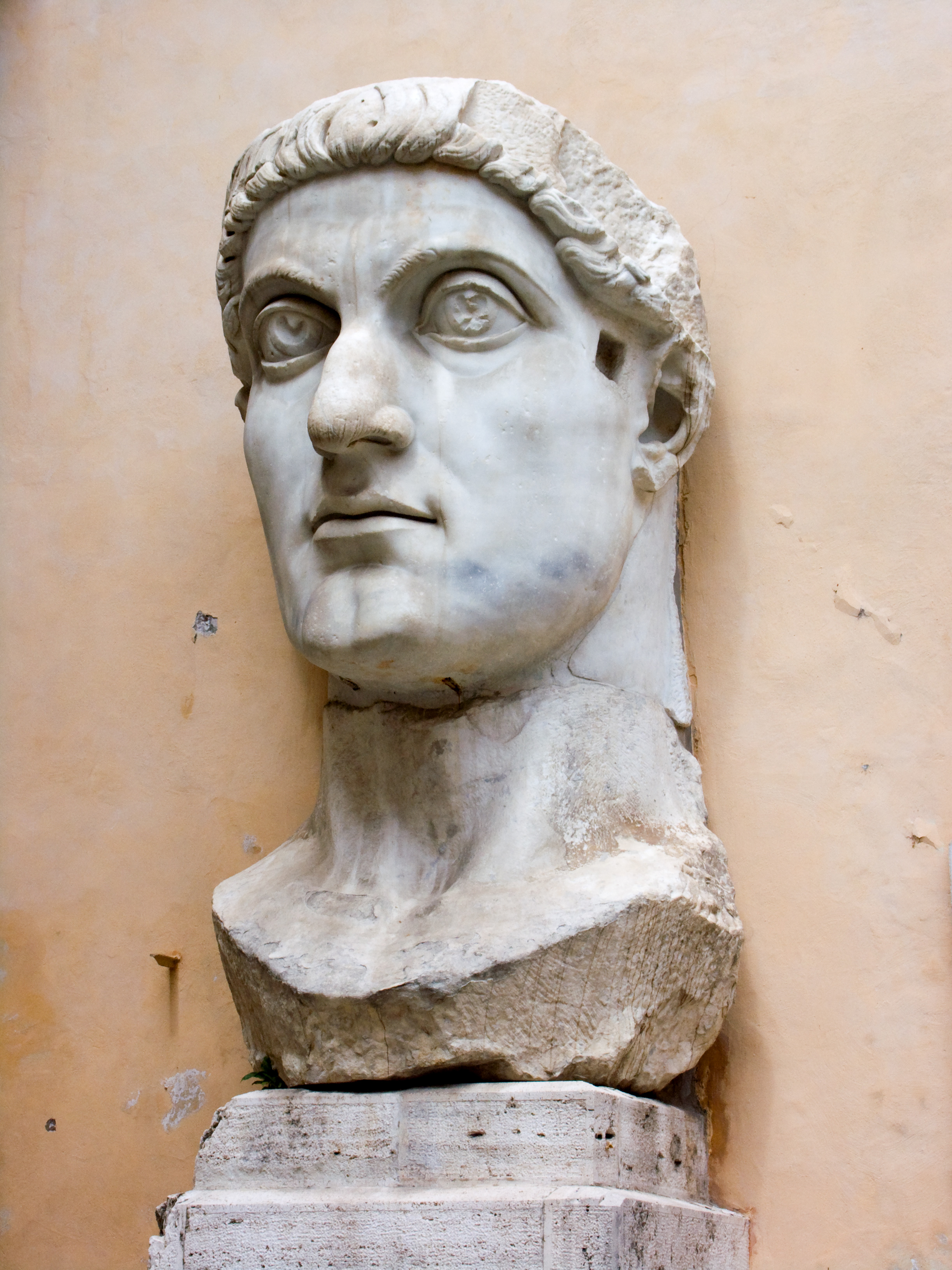
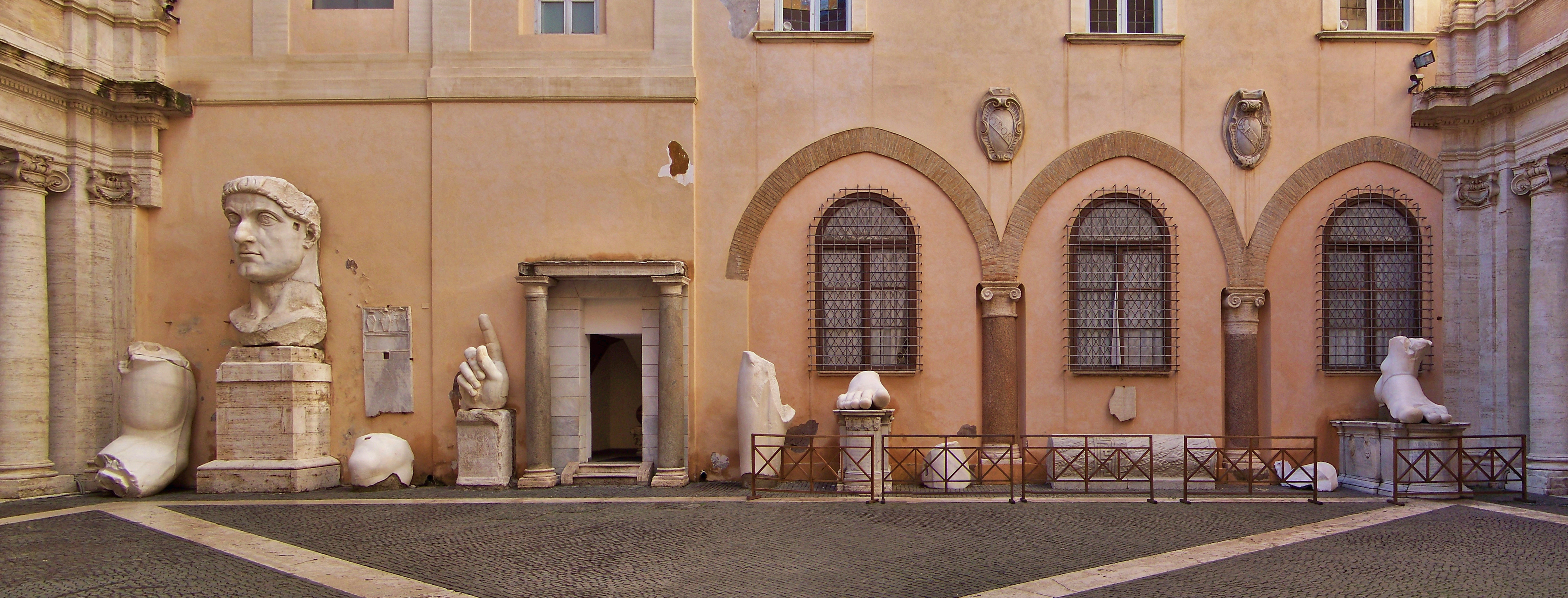
Fragments of the Colossus of Constantine, c. 312-15, Roman, marble, brick, wood, and gilded bronze, Rome, Musei Capitolini.
Description
The colossal statue of Roman Emperor Constantine the Great (r. July 25, 306 – May 22, 337) originally stood in the western apse of the Basilica of Maxentius in Rome. Fragments can now be found in the courtyard of the Palazzo dei Conservatori of the Musei Capitolini. Based on the scale of the surviving pieces (in marble) the full-sized figure, which was seated and enthroned, would have been about 12 meters (40 feet) tall. The head is about 2.5 meters tall. Curiously, there are two right hands, both with pointed index fingers although with other slight differences, which suggests that the hand was replaced and reworked at some point during Late Antiquity, perhaps as required by a desire to substitute a scepter with a Christian attribute.
The marble fragments of the statue (head, arms, and legs, the rest was a wooden frame over a brick core, possibly gilded) were rediscovered in 1486.
The marble fragments of the statue (head, arms, and legs, the rest was a wooden frame over a brick core, possibly gilded) were rediscovered in 1486.
Source
https://www.arctron.de/referenzen/2006/kaiser-konstantin/
(in German)
(in German)
Files
Collection
Citation
“Colossus of Constantine,” HAA Image Hosting, accessed September 26, 2026, https://haaimagehosting.omeka.fas.harvard.edu/items/show/284.
Embed
Copy the code below into your web page