Browse Items (20 total)
- Collection: Late Antiquity, Seminar 1
Sort by:
Circular Pendant with Double Solidus of Constantine I
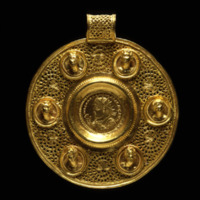
Museum Description: “The consummate skill used to create this pendant places it among the most highly accomplished examples of gold jewelry from the early Byzantine period. The elaborate frame around the imperial medallion combines two techniques:…
Colossus of Constantine
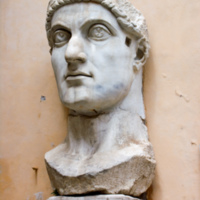
The colossal statue of Roman Emperor Constantine the Great (r. July 25, 306 – May 22, 337) originally stood in the western apse of the Basilica of Maxentius in Rome. Fragments can now be found in the courtyard of the Palazzo dei Conservatori of the…
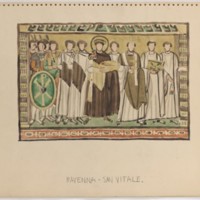
Empress Bust Weight
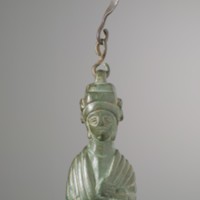
Museum wall text: “Steelyards were used to weigh commodities in the ancient marketplace. The beam, with units of measurement inscribed on three faces, is calibrated for three different scales: one weighed objects up to 13 pounds, another up to 34,…
Four Panels from a Casket
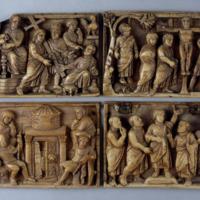
The four panels depict episodes from Passion and Resurrection of Christ.
Top left: (these vignettes are meant to be read separately) the Judgement and Denial of St. Peter, at left, Pontius Pilate is shown seated, washing his hands in a basin with…
Top left: (these vignettes are meant to be read separately) the Judgement and Denial of St. Peter, at left, Pontius Pilate is shown seated, washing his hands in a basin with…
Fragment of a Marble Tomb Relief with Christ Giving the Law
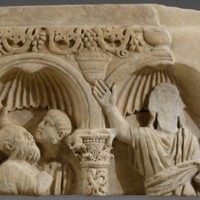
Museum wall text: “The authority of the Christian church grew rapidly with emperor Constantine's recognition of the faith as a legal religion within the Roman Empire in 313. Increasingly the most powerful centers of the church were the old imperial…
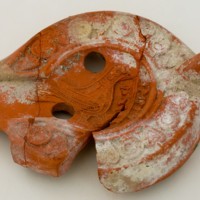
Gold Glass Medallion with a Mother and Child
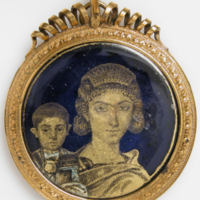
Museum Description: "The mother, a fashionably coiffed matron, is shown with her son. He wears a large gold pectoral, or neck ring. Medallions like this one, meant to be worn as jewelry, are closely associated with Alexandria.”
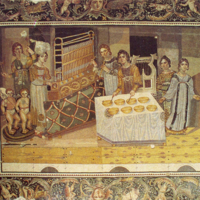
Hanging with Hestia Polyolbus
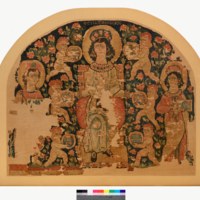
Museum Description: "This tapestry excited scholarly interest immediately after the Blisses acquired it in 1929. They lent it in 1931 to the first major exhibition of Byzantine art in Paris where, according to Royall Tyler, the French art historian…