Lampstand or Candlestick
Dublin Core
Title
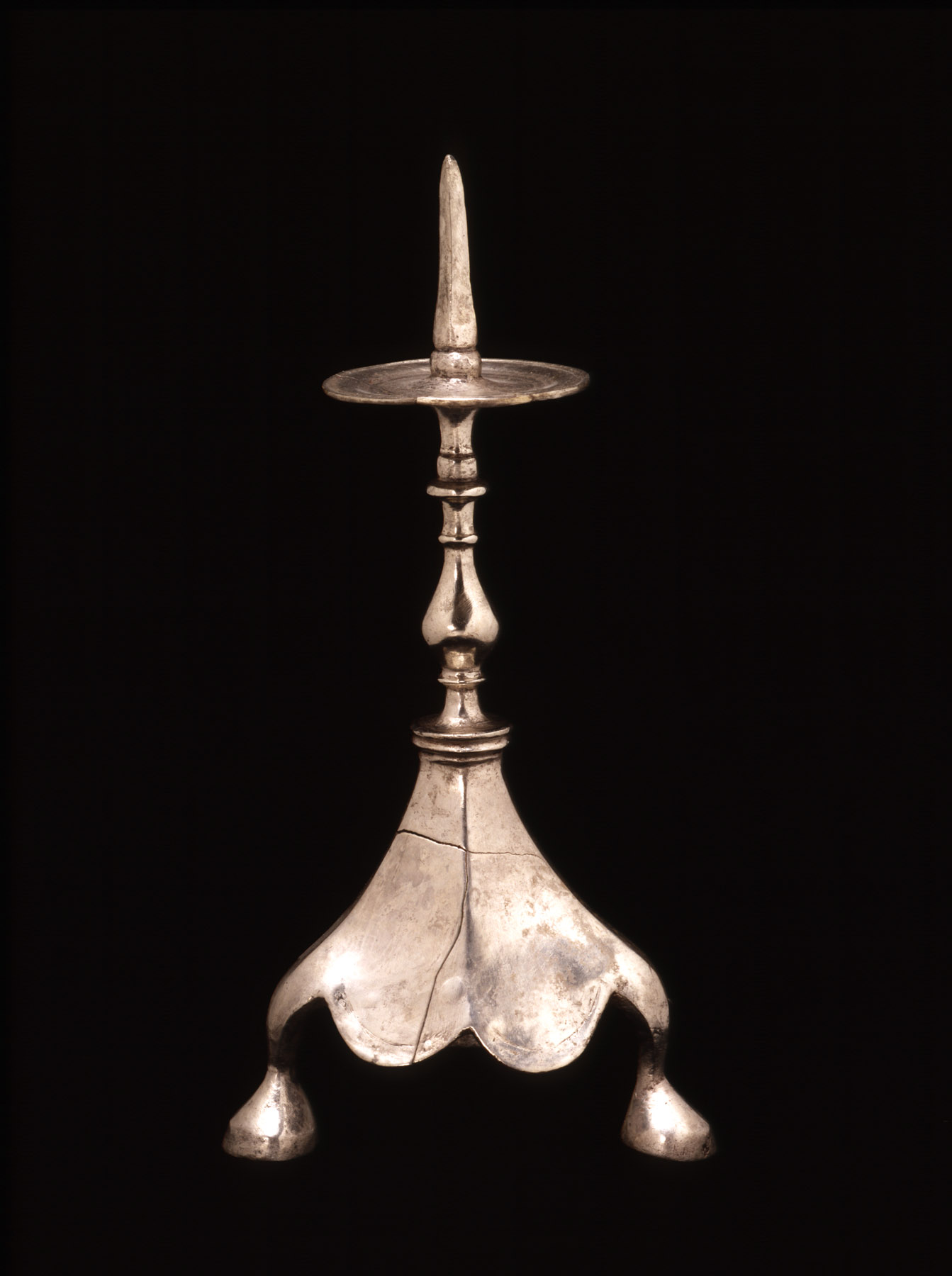
Lampstand or Candlestick
Subject
a. Early Byzantine c. 602-610 (stamps of Phocas)
b. 21.2 cm, silver
c. Dumbarton Oaks BZ.1938.83
b. 21.2 cm, silver
c. Dumbarton Oaks BZ.1938.83
Description
Excavated in Antioch in a fragmentary state and restored, this lampstand or candlestick rests upon three feet, which support a flaring base of petal-shaped aprons. Above, a baluster topped with a disk ends with a four-sided spike known as a pricket. This would have fit into the four-sided sleeve in the base of a metal oil-lamp, known from numerous extant examples in bronze. Alternatively, it might have been used to stabilize a candle, a source of domestic lighting just coming into use in seventh-century Byzantium. Comfortably grasped about the baluster and carried, the stand is portable and would have allowed the source of light to be moved easily from place to place. Its size suggests that it was meant to be placed on a table or in a niche.
Impressed on the underside of the base are traces of five control stamps, with which many Byzantine silver objects were marked between the late-fifth and mid-seventh centuries. This system of stamps may have been reserved for objects of high silver content, as the state attempted to control the trade of precious metals, or, the state may have mass-produced these objects in imperial workshops, stamping them during production to authorize their sale.
Typically applied before an object was fully finished, stamps often provide the only information regarding date and place of origin. One of the stamps on this stand bears a partial inscription referring to the city of Antioch; a more complete inscription designating the city also appears on a similarly-stamped silver lamp in the Walters Art Museum in Baltimore. Thus, this stand was likely created in Antioch during the reign of Emperor Phocas (602-610), whose partial monogram appears beside one of the control stamps. Additionally, two very similar stands are now in the British Museum and the Byzantine Museum in Athens, dated to the mid-sixth and early seventh centuries, respectively, which were stamped in Constantinople. The close resemblance in size, shape and weight among these three objects, despite their different sites of manufacture, suggests some form of standardized, state-controlled production.
- S. Zwirn
Impressed on the underside of the base are traces of five control stamps, with which many Byzantine silver objects were marked between the late-fifth and mid-seventh centuries. This system of stamps may have been reserved for objects of high silver content, as the state attempted to control the trade of precious metals, or, the state may have mass-produced these objects in imperial workshops, stamping them during production to authorize their sale.
Typically applied before an object was fully finished, stamps often provide the only information regarding date and place of origin. One of the stamps on this stand bears a partial inscription referring to the city of Antioch; a more complete inscription designating the city also appears on a similarly-stamped silver lamp in the Walters Art Museum in Baltimore. Thus, this stand was likely created in Antioch during the reign of Emperor Phocas (602-610), whose partial monogram appears beside one of the control stamps. Additionally, two very similar stands are now in the British Museum and the Byzantine Museum in Athens, dated to the mid-sixth and early seventh centuries, respectively, which were stamped in Constantinople. The close resemblance in size, shape and weight among these three objects, despite their different sites of manufacture, suggests some form of standardized, state-controlled production.
- S. Zwirn
Files
Collection
Citation
“Lampstand or Candlestick,” HAA Image Hosting, accessed October 1, 2026, https://haaimagehosting.omeka.fas.harvard.edu/items/show/1478.
Embed
Copy the code below into your web page