Browse Items (22 total)
- Collection: Late Antiquity 4/19
Sort by:
Copper alloy weight of King Theoderic of the Ostrogoths
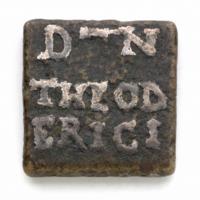
Copper alloy weight of Theoderic, square with convex profile; inscribed on the face and sides; inlaid with silver, some missing; on the base a herring-bone wreath enclosing denominational mark; four-lobed motif in each…
Silver ingot with stamps of Emperor Honorius (AD 395-423)
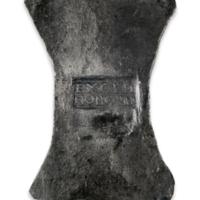
Silver ingots like this were used to pay soldiers and civil servants in the Late Roman Empire. The stamped inscription reads EX OFFE HONORINI, which translates 'from the workshop of Honorinus'. It was found in 1777 with two gold coins of the emperor…
Gold ingot, late 4th century, found in Romania, Braşov (county), and Braşov (city)
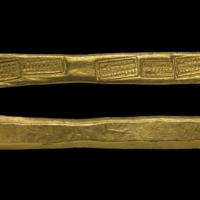
Gold currency-bar stamped four times with a rectangular stamp recording the name of the procurator, Flavianus and once with the name of the assayer, Lucianus.
This is one of a hoard of fifteen such bars found in a Carpathian mountain pass in the…
This is one of a hoard of fifteen such bars found in a Carpathian mountain pass in the…