Gold ingot, late 4th century, found in Romania, Braşov (county), and Braşov (city)
Dublin Core
Title
Gold ingot, late 4th century, found in Romania, Braşov (county), and Braşov (city)
Subject
4th c (late), Sirmium, gold, 476.2 g, British Museum
Description
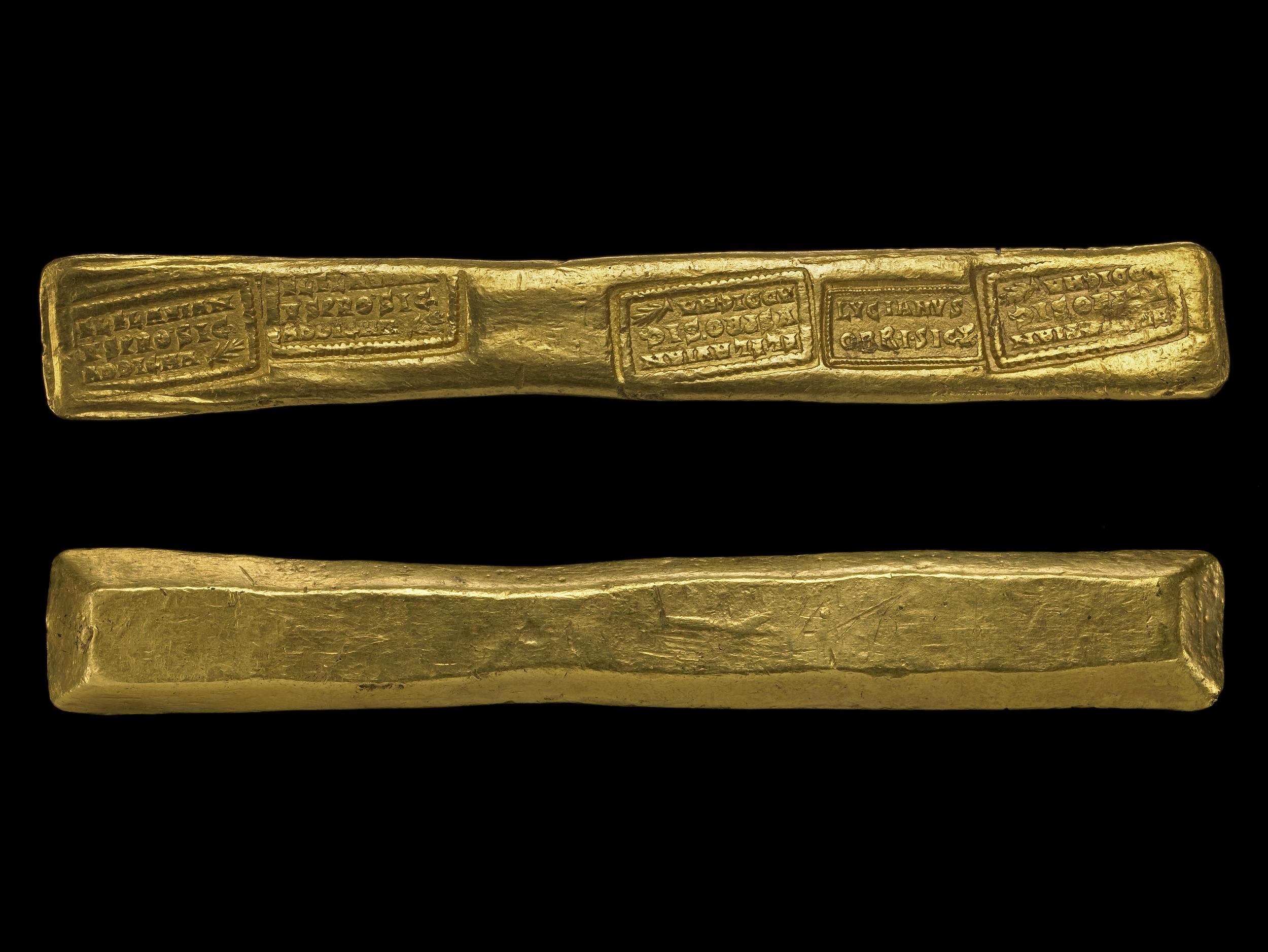
Gold currency-bar stamped four times with a rectangular stamp recording the name of the procurator, Flavianus and once with the name of the assayer, Lucianus.
This is one of a hoard of fifteen such bars found in a Carpathian mountain pass in the 19th century. To ensure the continued purity of the gold coinage, in about AD 367 the emperors ordered all gold coins paid in tax to be melted down into bars before being turned back into coin (Codex Theodosianus 12.6.2), although the presence of gold bars in the late third century Aboukir (Egypt) Hoard suggests that the practice had been in place since at least Tetrarchic times. It was easier to test a smaller number of large bars than millions of individual coins for forgeries to ensure that they were of pure refined gold (obryzium; abbreviated to OB on the coinage at this time and OBR on this bar). Such gold bars represent the intermediate form the gold took after melting and before it was turned back into coins. They are marked with stamps of the assayers Flavianus and Lucianus, to demonstrate the quality of the metal, in this case - as other examples from the hoard attest - from a testing centre at Sirmium (Sremska Mitrovica) near the Danube.
Inscription:
FL FLAVIANVS PRO●SIG AD DIGMA (branch)
LVCIANVS OBR●I●SIG (Christogram)
This is one of a hoard of fifteen such bars found in a Carpathian mountain pass in the 19th century. To ensure the continued purity of the gold coinage, in about AD 367 the emperors ordered all gold coins paid in tax to be melted down into bars before being turned back into coin (Codex Theodosianus 12.6.2), although the presence of gold bars in the late third century Aboukir (Egypt) Hoard suggests that the practice had been in place since at least Tetrarchic times. It was easier to test a smaller number of large bars than millions of individual coins for forgeries to ensure that they were of pure refined gold (obryzium; abbreviated to OB on the coinage at this time and OBR on this bar). Such gold bars represent the intermediate form the gold took after melting and before it was turned back into coins. They are marked with stamps of the assayers Flavianus and Lucianus, to demonstrate the quality of the metal, in this case - as other examples from the hoard attest - from a testing centre at Sirmium (Sremska Mitrovica) near the Danube.
Inscription:
FL FLAVIANVS PRO●SIG AD DIGMA (branch)
LVCIANVS OBR●I●SIG (Christogram)
Files
Collection
Citation
“Gold ingot, late 4th century, found in Romania, Braşov (county), and Braşov (city),” HAA Image Hosting, accessed October 7, 2026, https://haaimagehosting.omeka.fas.harvard.edu/items/show/1436.
Embed
Copy the code below into your web page