Byzantine Pectoral with Coins and Pseudo-Medallion
ca. 539–50
Dublin Core
Title
Byzantine Pectoral with Coins and Pseudo-Medallion
ca. 539–50
ca. 539–50
Subject
Byzantine Pectoral with Coins and Pseudo-Medallion
ca. 539–50
ca. 539–50
Description
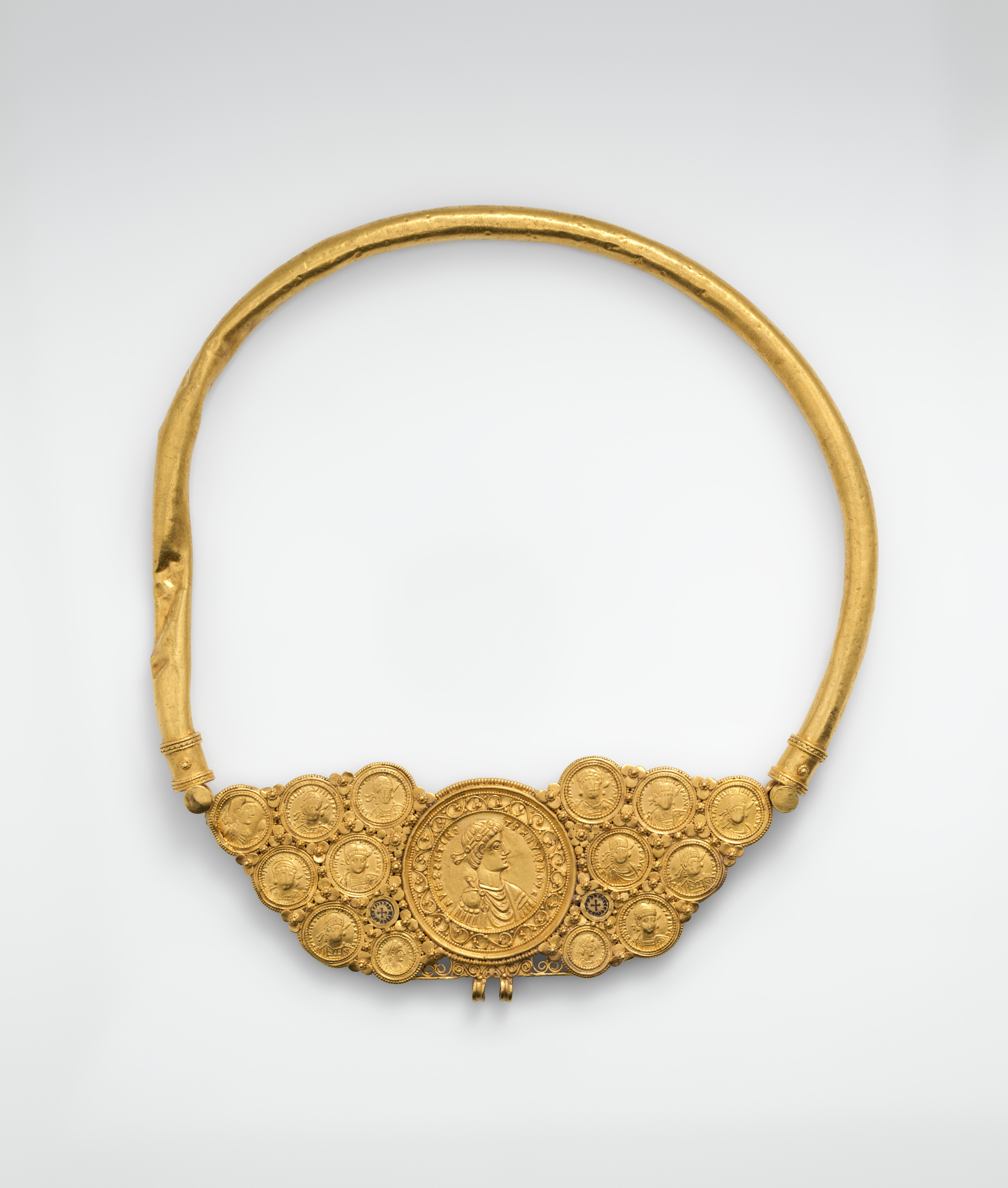
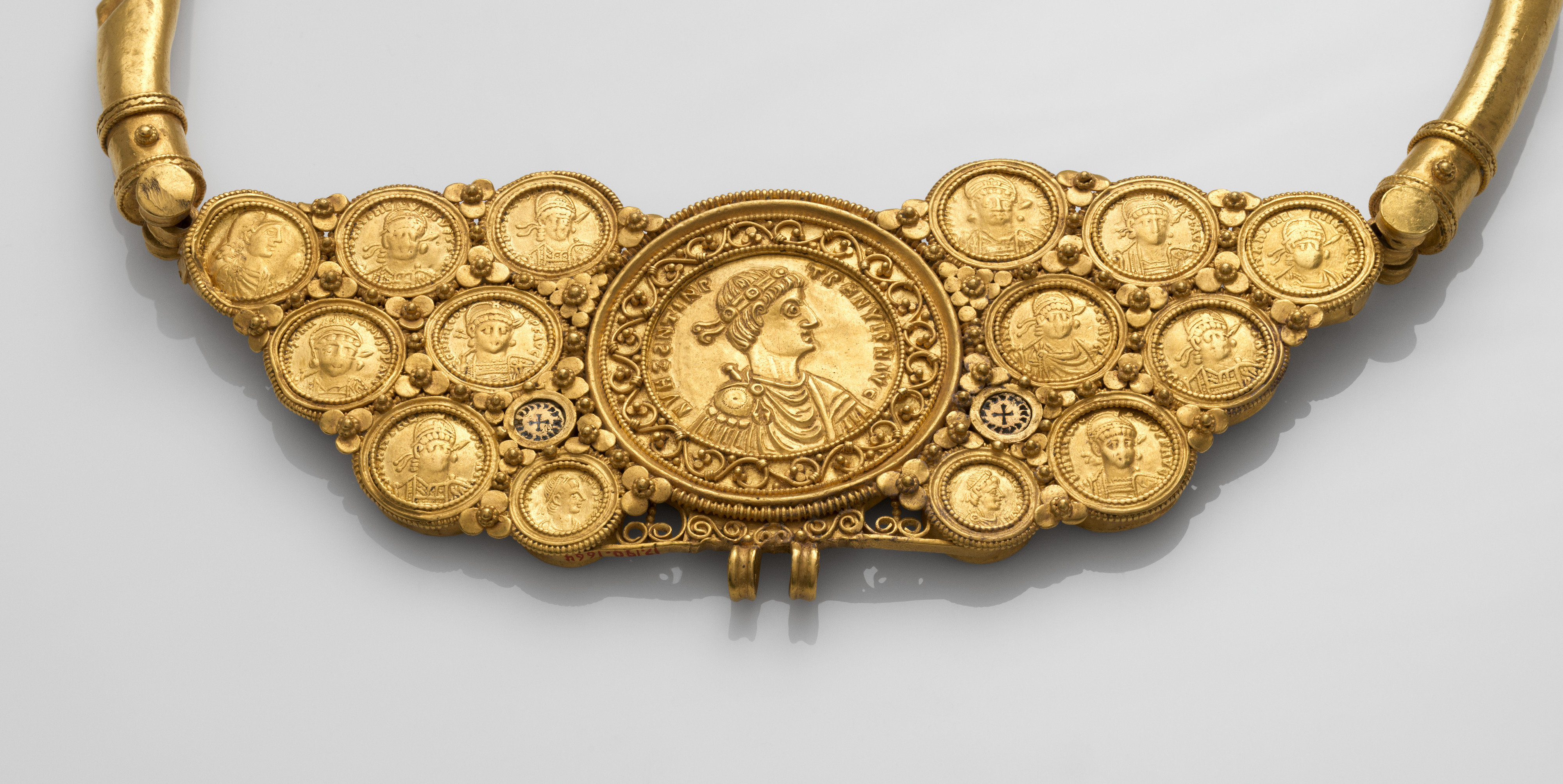
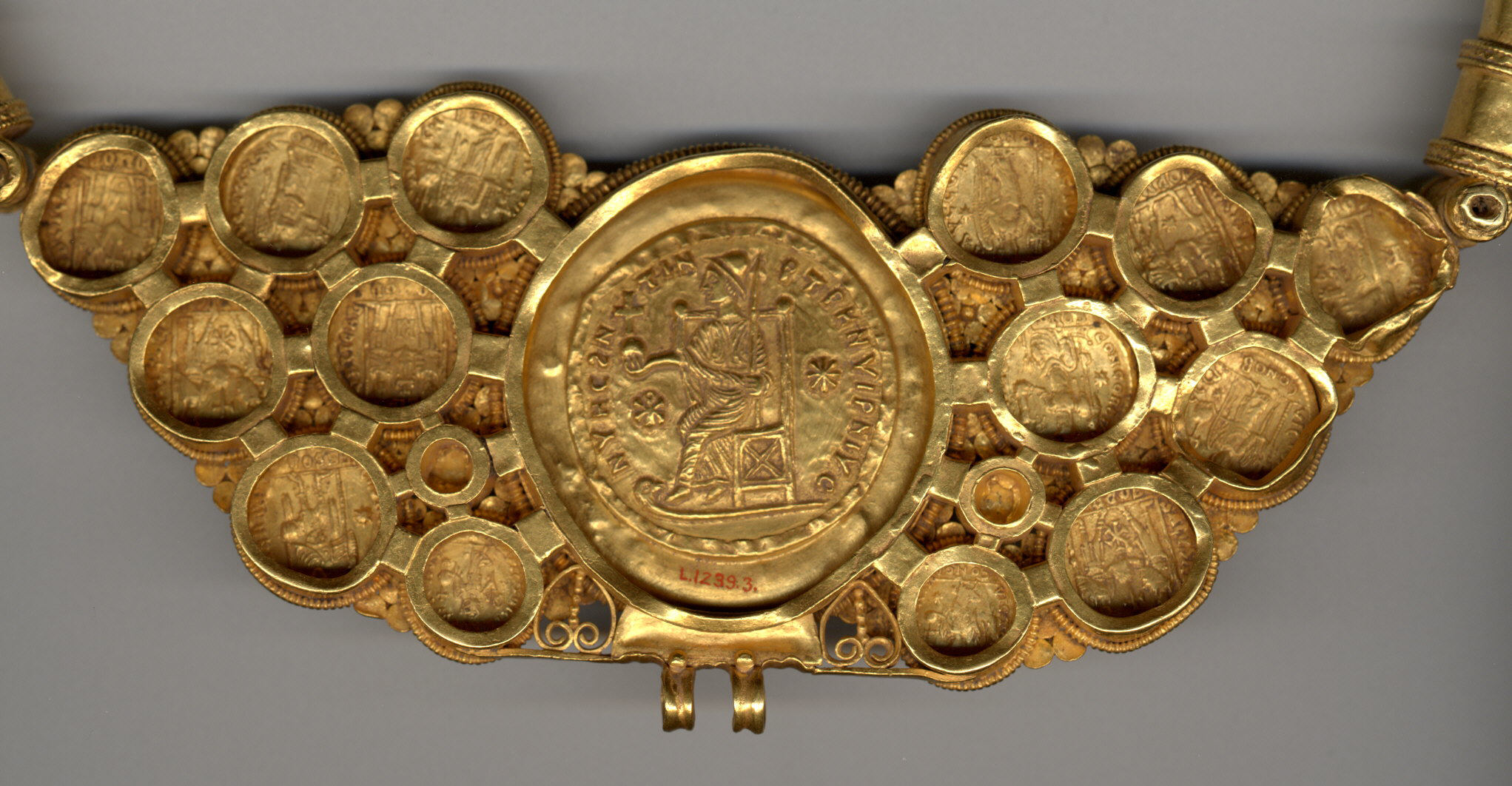
Neck rings, such as this imposing gold example, are cited in early sources as playing a role both in the glorification of military heroes and in coronation ceremonies. This pectoral necklace is composed of a plain, hollow neck ring attached to a frame set with a large central medallion flanked by coins and two small decorative disks. Although it was found in Egypt, the pectoral is believed to have been made in Constantinople, since a personification of that city is depicted on the reverse of the central medallion. The front of the medallion and the smaller coins depict Byzantine emperors. The two ribbed rings at the pectoral's lower edge once held a large medallion of the emperor Theodosius I. This imperial imagery suggests that the pectoral is composed of a collection of military trophies that once belonged to a distinguished general or a member of the imperial court.
Creator
Byzantine Empire
Rights
Metropolitan Museum, NYC, Gift of J. Pierpont Morgan, 1917
Accession Number: 17.190.1664
Accession Number: 17.190.1664
Format
Gold, niello
Overall dimensions: 9 7/16 x 8 5/8 x 5/8 in. (23.9 x 21.9 x 1.6 cm)
ring: 19 11/16 x 3/8 in. (50 x 1 cm)
Overall dimensions: 9 7/16 x 8 5/8 x 5/8 in. (23.9 x 21.9 x 1.6 cm)
ring: 19 11/16 x 3/8 in. (50 x 1 cm)
Hyperlink Item Type Metadata
URL
https://www.metmuseum.org/art/collection/search/464070
Files
Collection
Citation
Byzantine Empire, “Byzantine Pectoral with Coins and Pseudo-Medallion
ca. 539–50,” HAA Image Hosting, accessed September 21, 2026, https://haaimagehosting.omeka.fas.harvard.edu/items/show/305.
ca. 539–50,” HAA Image Hosting, accessed September 21, 2026, https://haaimagehosting.omeka.fas.harvard.edu/items/show/305.
Embed
Copy the code below into your web page