Child’s Tunic
Dublin Core
Title
Child’s Tunic
Subject
Egypt, 4th–10th c.
H. (warp) 51.0 cm × W. (weft, sleeve to sleeve) 53.5 cm (20 1/16 × 21 1/16 in.)
Tapestry weave in polychrome wool with embroidery in polychrome wool
BZ.1970.46
H. (warp) 51.0 cm × W. (weft, sleeve to sleeve) 53.5 cm (20 1/16 × 21 1/16 in.)
Tapestry weave in polychrome wool with embroidery in polychrome wool
BZ.1970.46
Description
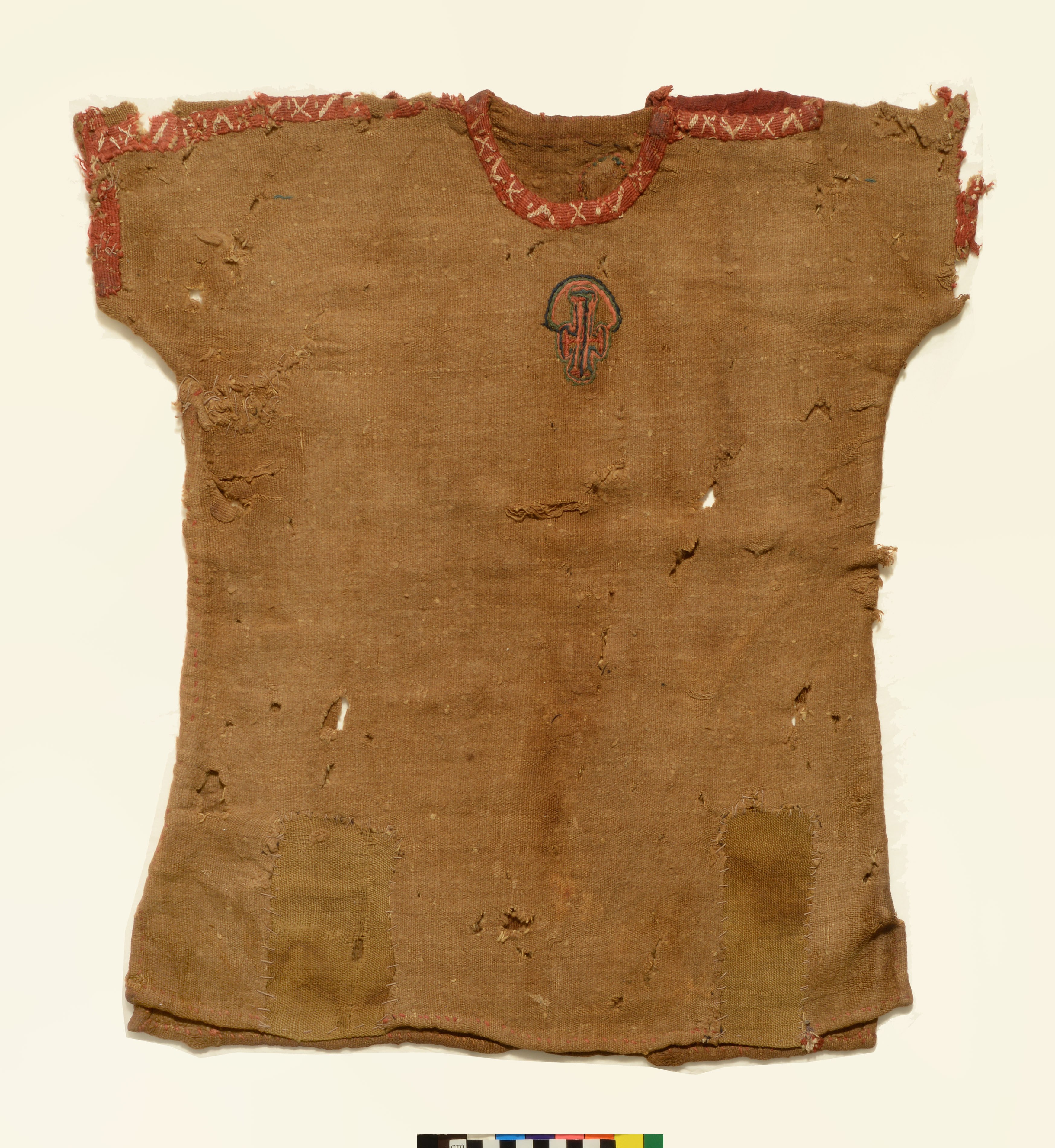
This small, largely intact tunic features added decorative elements in tapestry weave and embroidery on a brown ground; there is significant soiling throughout the fabric. The neckline and sleeves of the tunic feature remnants of tapestry-woven decoration in red with crisscross details in beige. A small cross in light pink, pink, green, light blue, and blue is embroidered just beneath the curved neckline. The back of the tunic, near the neck, is similarly embroidered. There are small holes throughout and elements of patching, especially along the bottom.
The tiny size of this tunic indicates that it was for an infant or toddler; the particular style of the neckline, which is cut open and reinforced on the right side, accommodated a small child’s head, and was probably once buttoned. The condition of the tunic suggests it was well-worn in life, and possibly repaired in antiquity. With their red ground and beige motifs, the decorative elements of the neck and sleeves reflected popular styles of adult dress, which in turn emulated silks (see BZ.1953.2.6 for further discussion). The placement of the embroidered crosses, likely added on at home, over the child’s neck and back were probably intended to have a protective function.
—Elizabeth Dospěl Williams, May 2019
The tiny size of this tunic indicates that it was for an infant or toddler; the particular style of the neckline, which is cut open and reinforced on the right side, accommodated a small child’s head, and was probably once buttoned. The condition of the tunic suggests it was well-worn in life, and possibly repaired in antiquity. With their red ground and beige motifs, the decorative elements of the neck and sleeves reflected popular styles of adult dress, which in turn emulated silks (see BZ.1953.2.6 for further discussion). The placement of the embroidered crosses, likely added on at home, over the child’s neck and back were probably intended to have a protective function.
—Elizabeth Dospěl Williams, May 2019
Files
Collection
Citation
“Child’s Tunic,” HAA Image Hosting, accessed July 29, 2026, https://haaimagehosting.omeka.fas.harvard.edu/items/show/1309.
Embed
Copy the code below into your web page