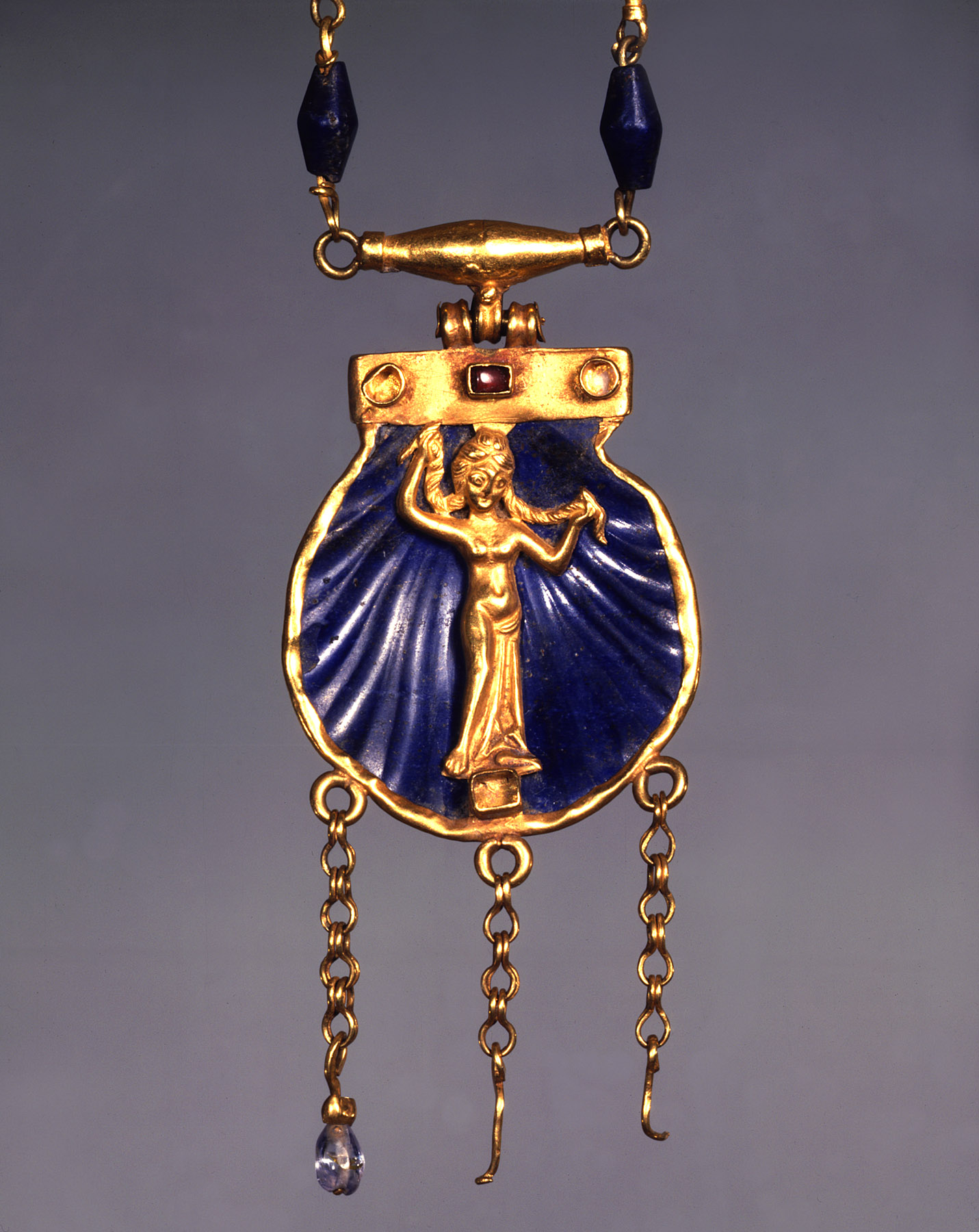
Necklace with Pendant of Aphrodite Anadyomene
Dublin Core
Title
Necklace with Pendant of Aphrodite Anadyomene
Subject
Early Byzantine
early 7th century
43.2 x 20.3 x 1.9 cm (17 x 8 x 3/4 in.)
gold and lapis lazuli
BZ.1928.6
early 7th century
43.2 x 20.3 x 1.9 cm (17 x 8 x 3/4 in.)
gold and lapis lazuli
BZ.1928.6
Description
Standing in a blue shell, Aphrodite Anadyomene wrings seawater from her hair. The pose was well known in antiquity, referring to the goddess’s birth from the sea, of which the deep blue color of the lapis lazuli is a visual metaphor. The harmony of references—pose, shell, deep blue color, and the sea pearls on the short chains—displays the jeweler’s ability to adapt a venerated mythological image to the luxury materials of elite taste during the early Byzantine period.
The delight and fascination with exquisitely crafted jewelry were undiminished at the end of late antiquity, and the appreciation of Greco-Roman mythology, even the most lascivious of all its goddesses, continued well after the Byzantine Empire had become an officially Christian society. Aphrodite’s fame as the goddess of beauty and physical desire are expressed by her seminudity and enhanced through the precious gold, lapis lazuli, and pearls of the necklace. Yet it might have been a magical property of the image that accounted for the figure’s allure. Amulets and charms, whether costly or cheap, had been worn for centuries as effective means of personal protection or for controlling the actions or emotions of other people. This elegant necklace may have been such an amulet (apotropaion), either against pervasive malevolent spirits or as a charm to grant an erotic wish.
S. Zwirn
The delight and fascination with exquisitely crafted jewelry were undiminished at the end of late antiquity, and the appreciation of Greco-Roman mythology, even the most lascivious of all its goddesses, continued well after the Byzantine Empire had become an officially Christian society. Aphrodite’s fame as the goddess of beauty and physical desire are expressed by her seminudity and enhanced through the precious gold, lapis lazuli, and pearls of the necklace. Yet it might have been a magical property of the image that accounted for the figure’s allure. Amulets and charms, whether costly or cheap, had been worn for centuries as effective means of personal protection or for controlling the actions or emotions of other people. This elegant necklace may have been such an amulet (apotropaion), either against pervasive malevolent spirits or as a charm to grant an erotic wish.
S. Zwirn
Files
Collection
Citation
“Necklace with Pendant of Aphrodite Anadyomene,” HAA Image Hosting, accessed October 9, 2026, https://haaimagehosting.omeka.fas.harvard.edu/items/show/1301.
Embed
Copy the code below into your web page