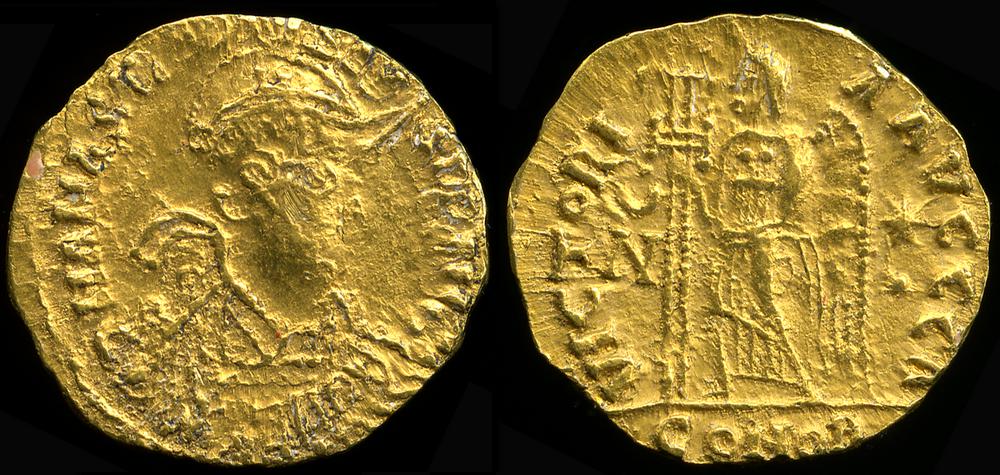
Gold Gallo-Visigothic solidus in imitation of a solidus of Byzantine Emperor Anastaios
Dublin Core
Title
Gold Gallo-Visigothic solidus in imitation of a solidus of Byzantine Emperor Anastaios
Subject
Gold Gallo-Visigothic solidus in imitation of a solidus of Byzantine Emperor Anastaios, France, 491-518, gold, 3.99 g, British Museum
Description
Gold coin. (whole)
Victory standing left, holding long cross. (reverse)
Helmeted, diademed and cuirassed bust of Anastasius, facing and holding spear and shield. (obverse)
Obverse inscription: DN ΛNΛSTΛSIVS PF ΛVC
Reverse inscription: VICTORIΛ ΛVGGG Λ
Lafaurie 1997 considers Anastasius coins with mintmarks in the reverse as Frankish in character, and mostly minted in Northern and Atlantic France. Nevertheless, the style of the Anastasius tremisses with mintmarks seems consistently Visigothic, and the solidi go alongside the tremisses. The initial Ň is read by Lafaurie as "Nantes" or "Noyon" (Oise), but Nontronum (Nontron, Dordogne) seems a more probable site for a Visigothic mint.
Victory standing left, holding long cross. (reverse)
Helmeted, diademed and cuirassed bust of Anastasius, facing and holding spear and shield. (obverse)
Obverse inscription: DN ΛNΛSTΛSIVS PF ΛVC
Reverse inscription: VICTORIΛ ΛVGGG Λ
Lafaurie 1997 considers Anastasius coins with mintmarks in the reverse as Frankish in character, and mostly minted in Northern and Atlantic France. Nevertheless, the style of the Anastasius tremisses with mintmarks seems consistently Visigothic, and the solidi go alongside the tremisses. The initial Ň is read by Lafaurie as "Nantes" or "Noyon" (Oise), but Nontronum (Nontron, Dordogne) seems a more probable site for a Visigothic mint.
Files
Collection
Citation
“Gold Gallo-Visigothic solidus in imitation of a solidus of Byzantine Emperor Anastaios,” HAA Image Hosting, accessed August 27, 2026, https://haaimagehosting.omeka.fas.harvard.edu/items/show/1230.
Embed
Copy the code below into your web page