Browse Items (972 total)
Sort by:
Hexagonal Pilgrim's Jar with Jewish Symbol
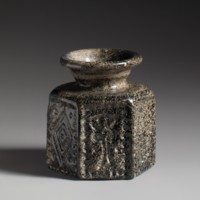
These vessels were made for Jews and Christians, possibly as tokens for pilgrims visiting the holy sites in Jerusalem or for use in burial rites. They appear to have been mass-produced in a single workshop, since the vessels for the two religions…
Yellow-Green Hexagonal Glass Bottle with a Stylite Saint
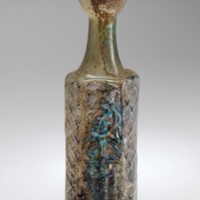
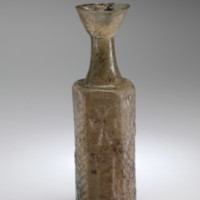
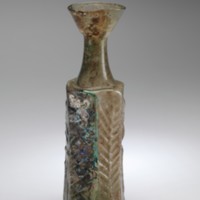
The stylite saints depicted on tall glass vessels made in Syria were men who renounced the world and lived atop pillars (styloi). Most renowned was Saint Symeon the Stylite the Elder (389–459), whose pillar on the mountain of Qal‘at Sem‘an, near…
Plaque of Saint Simeon
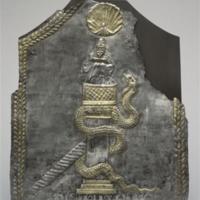
This silver plaque is a precious record of the worship of stylite saints in the eastern Mediterranean in the 6th and 7th centuries. It was originally part of the treasure of the church of Ma'arrat an Numan, Syria. The decoration, figured in relief,…
pilgrim token
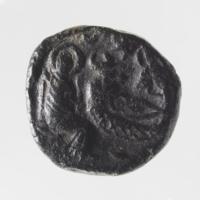
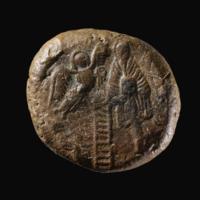
Pilgrim-token; terracotta; medallion depicting on one side the Nativity, the Virgin on the left.
A Model of the Church of the Holy Sepulcher, Jerusalem
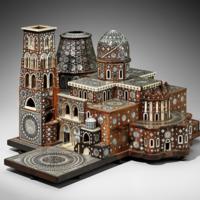
Still standing in Jerusalem, the Church of the Holy Sepulcher enshrines the reputed sites of Jesus’s crucifixion, entombment, and resurrection. In the 17th century, Middle Eastern craftsmen—working in Franciscan monasteries in the Holy Land—produced…
Pilgrim's Ampulla with (Symbolic) Crucifixion and Marys at the Tomb
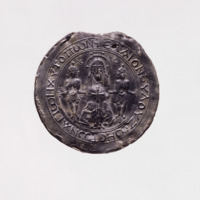
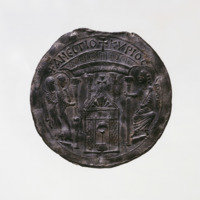
According to the inscription on this lead vial or ampulla, it contained oil from the wood of the true cross, obtained from the Holy Land. At the sites of sacred events, pilgrims could acquire “eulogiae,” literally “blessings,” in the form of tokens…